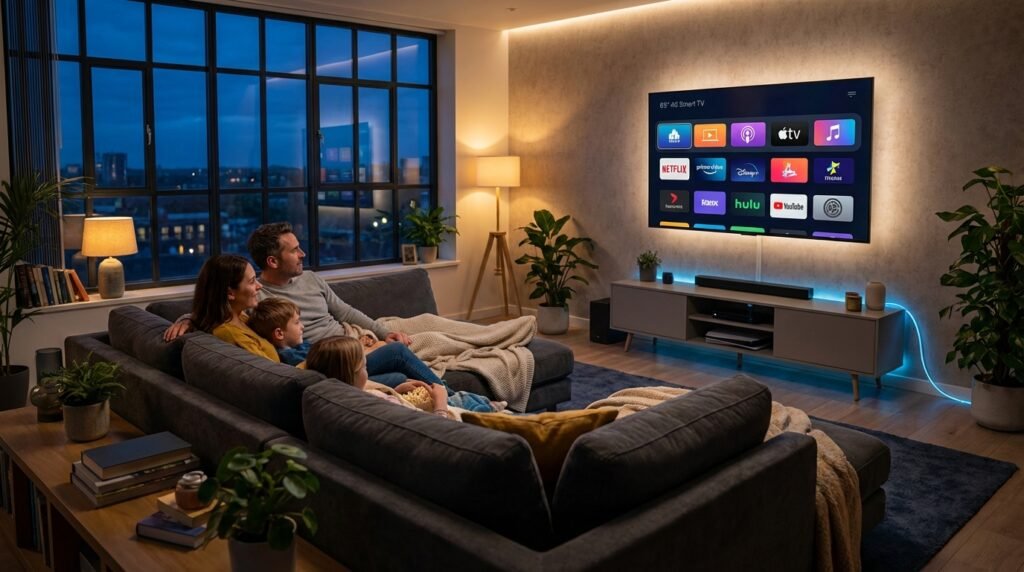
Television has never been the same since the internet took over the living room. Gone are the days when you were stuck with whatever the cable company decided to bundle into an overpriced package. Today, smart IPTV is rewriting the rules of home entertainment — and for millions of households worldwide, it’s already become the default way to watch.
Before diving into the technical setup, make sure to check our expert list of the Best IPTV UK providers to ensure you have a premium and stable connection. Whether you’re a complete beginner trying to figure out what smart IPTV actually is, or a tech-savvy user looking to squeeze every last drop of performance from your setup, this guide covers the full picture. From the technical backbone that keeps streams running smoothly to step-by-step installation instructions for LG and Samsung TVs, consider this your definitive resource.
Table of Contents
The Global Shift to Smart IPTV Ecosystems
Redefining What Television Means
At its core, smart IPTV is a sophisticated application that delivers television content through an internet connection rather than through the traditional satellite dish or cable socket on your wall. But calling it just an “app” undersells what it actually represents — it’s an entire ecosystem built around giving viewers control.
One of the biggest reasons operators are investing heavily in smart IPTV infrastructure is the concept of value-added services, or VAS. These go far beyond just live TV. Think Video on Demand (VoD), catch-up TV, time-shifted viewing, and interactive content. Each of these features drives up Average Revenue Per User (ARPU), making smart IPTV a commercially attractive model for both providers and platform developers alike.
A Market That’s Growing Fast
The migration from analogue broadcasting to digital IP-based delivery has been accelerating at a remarkable pace. Nations with well-developed broadband infrastructure — places like South Korea, the Netherlands, and the UAE — are seeing subscription numbers climb year after year. As fibre-optic networks extend into suburban and rural areas, the addressable market for smart IPTV continues to expand.
The maths is simple: better internet access equals more viable smart IPTV users. And with global broadband penetration still rising, this is a trend that shows no signs of reversing.
Why Consumers Are Making the Switch
From a viewer’s perspective, the appeal is straightforward. Smart IPTV offers HD and 4K streaming without the limitations of broadcast schedules. It gives access to international channels that a standard cable package would never include. And in most cases, it costs considerably less than a traditional cable subscription — especially when you factor in the elimination of equipment rental fees, long-term contracts, and channel bundles padded with content you’d never watch. This financial efficiency is why many households are now opting for a professional IPTV Subscription UK to reclaim their entertainment budget.
The Technical Architecture of a Smart IPTV System
The Standards Behind the Stream
Smart IPTV doesn’t just work by magic. Beneath the surface, it relies on internationally recognised network standards that ensure reliability and scalability. The Next Generation Network (NGN) model is the architectural foundation most serious smart IPTV deployments are built upon. Within this model, two subsystems do particularly heavy lifting: the IP Multimedia Subsystem (IMS), which manages sessions and signalling, and the Resource and Admission Control Subsystem (RACS), which ensures that bandwidth is allocated appropriately so your stream doesn’t collapse during peak hours.
Vertical vs. Converged Delivery
Not all smart IPTV deployments are built the same way. Proprietary vertical solutions are closed, self-contained systems where the provider controls everything from content encoding to the set-top box firmware. These offer tight quality control but limited flexibility.
Converged NGN environments, on the other hand, allow multiple services — voice, data, and video — to coexist on the same IP infrastructure. This approach is more scalable and is increasingly the preferred direction for modern smart IPTV operators who want to future-proof their networks.
Head-End Infrastructure: The Engine Room
The journey your content takes before reaching your screen involves several critical infrastructure points. At the top sits the Super Head-End (SHE) — the central hub where content is acquired, often via satellite, and encoded into IP-compatible formats.
From there, it travels to a Video Hub Office (VHO), a regional distribution point that handles large geographic areas. Finally, the stream passes through a Video Serving Office (VSO) — the last mile delivery node that pushes content directly to subscribers. Each of these layers plays a role in maintaining the stream quality you experience on your TV.
Middleware: The Glue That Holds It Together
Smart IPTV middleware is often overlooked but is arguably the most important layer of the entire system. It’s the software platform that manages user authentication, handles subscriptions, and powers the Electronic Programme Guide (EPG) — that on-screen channel guide you scroll through when deciding what to watch. Good middleware makes the smart IPTV experience feel seamless. Poor middleware leads to login failures, missing channels, and a frustrating user experience.
Preparing Your Network for Smart IPTV Installation
Hardware Compatibility First
Before you download anything, you need to confirm that your television is compatible. For LG users, the smart IPTV app requires WebOS 3.0 or later, which generally corresponds to LG TVs manufactured from 2016 onwards. Samsung users should be working with a model from 2015 or later to ensure the required Smart Hub functionality is present. If your smart television is an older model and lacks native app support, you can follow our detailed guide on how to setup IPTV on Firestick for a high-performance alternative.
Your Internet Connection: The Real Foundation
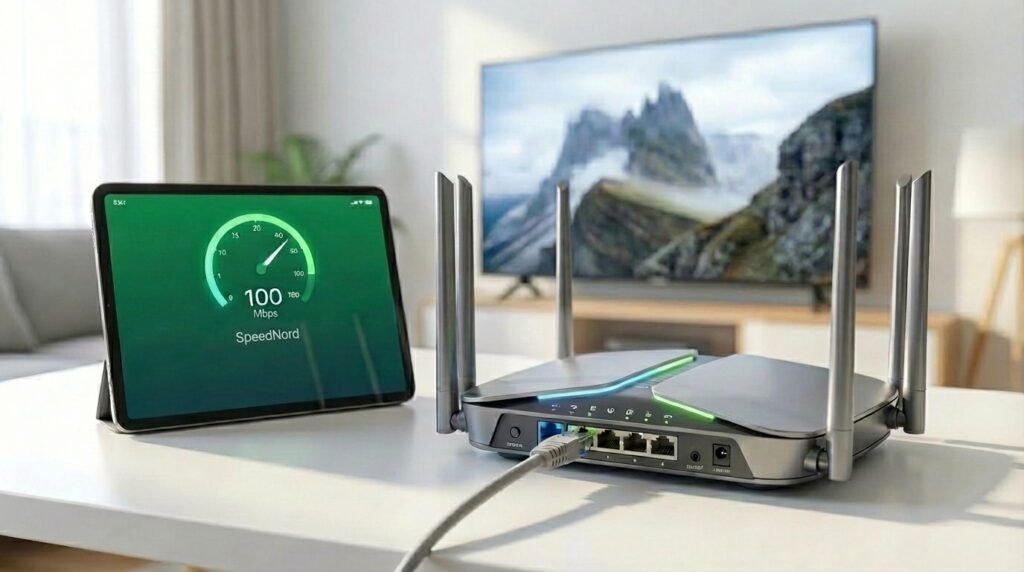
Here’s something many guides don’t say clearly enough: your smart IPTV experience is only ever as good as your internet connection. These are the practical benchmarks you should be aware of:
- Standard Definition (SD): Minimum of 5 Mbps
- High Definition (HD): At least 10 Mbps
- 4K Ultra HD: 25 Mbps or higher, consistently
These aren’t “ideal” numbers — they’re floor requirements. If your connection drops below these thresholds during streaming, expect buffering, pixelation, and dropped streams. Wired Ethernet connections are always preferable to Wi-Fi for smart IPTV setups, and we’ll revisit this point in the troubleshooting section.
Account Prerequisites
Both LG and Samsung require an active manufacturer account to access their respective app stores. Make sure your LG or Samsung account is set up and linked to your TV before attempting any installation. This sounds like a minor point, but it catches a surprising number of first-time users off guard.
Implementing Smart IPTV on LG Smart TVs
Using the LG Content Store
The most straightforward path is through the LG Content Store, and it takes only a few minutes:
- Press the Home button on your remote to open the main menu.
- Navigate to the LG Content Store tile and open it.
- Use the search function and type “Smart IPTV.”
- Select the app from the results and click Install.
- Once the installation completes, launch the app directly from the store or locate it in your app list.
This direct method works on approximately 85% of LG models released after 2016, making it the recommended first approach before attempting anything more complex.
USB Sideloading for LG TVs
If the smart IPTV app isn’t available in your regional version of the LG Content Store — which does happen in certain markets — sideloading via USB is a reliable workaround. Here’s how:
- Download the smart IPTV .ipk file from the official developer’s website onto your computer.
- Format a USB drive to FAT32.
- Copy the .ipk file to the root directory of the USB drive.
- Plug the USB drive into your LG TV.
- Navigate to the Developer Mode settings and install the app manually.
This process requires enabling Developer Mode on the TV, which involves registering the device through LG’s developer portal. It’s a few extra steps but entirely achievable without technical expertise.
Deploying Smart IPTV on Samsung Smart TV Platforms
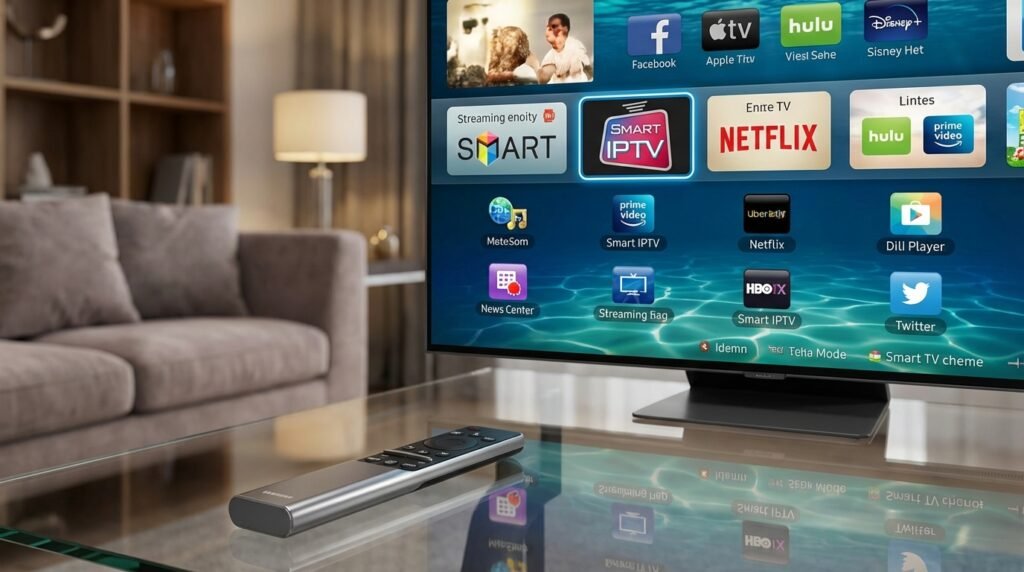
Finding the App Through Samsung Smart Hub
Samsung’s installation process follows a similar logic:
- Press the Home button on your remote.
- Navigate to the Apps section within Smart Hub.
- Click the Search icon and enter “Smart IPTV.”
- Select the app and choose Install.
- Return to the Smart Hub home screen where the smart IPTV icon will now appear.
USB Installation for Samsung
For Samsung users who don’t find the app in their regional store:
- Download the smart IPTV APK file to a USB drive.
- Create a folder on the USB drive named exactly “SmartIPTV” — spelling and capitalisation matter here.
- Place the APK file inside that folder.
- Plug the USB drive into your Samsung TV.
- Open the My Apps section in Smart Hub, where the system should detect and prompt you to install the app.
For those who find the native app store limited, IPTV Smarters Pro remains the most versatile player to use alongside your Smart TV setup, offering granular control over playlists, EPG mapping, and multi-screen management that the default smart IPTV interface doesn’t always provide.
Post-Installation Launch
Once installed, the smart IPTV icon will appear within your Samsung Smart Hub. Open it for first-time activation — it will display your device’s MAC address, which you’ll need for the next step.
Activation and Playlist Management for Smart IPTV
Finding Your MAC Address
When you first open the smart IPTV app, it displays a unique MAC address for your device. Write this down or take a photo — it’s your device’s identifier for the activation process and links your TV to your subscription.
Activating Through siptv.app
The official activation portal is siptv.app. The process is as follows:
- Visit siptv.app from any browser (phone, laptop, or tablet).
- Enter your TV’s MAC address in the designated field.
- Paste your M3U playlist URL — provided by your IPTV service — into the corresponding field.
- Click submit to pair your playlist with your device.
- Restart the smart IPTV app on your TV to load the channels.
Adding Multiple Playlists
Smart IPTV supports multiple channel lists on a single device. To add additional playlists, simply repeat the MAC/URL submission process on the siptv.app portal, selecting a different playlist slot each time. This is particularly useful if you’re pulling content from more than one provider or have separate lists for different languages or content categories.
Optimising the Smart IPTV User Experience
Organising Your Channels
Out of the box, your smart IPTV channel list might feel like a cluttered spreadsheet. Take time to create Favourites lists by marking channels you watch regularly. Most smart IPTV interfaces allow you to group channels into custom categories — sports, news, kids, movies — making navigation faster and more intuitive.
Buffer Settings and Performance Tuning
If you’re experiencing occasional lag or brief freezes, the culprit is often the buffer size setting. Inside the smart IPTV settings menu, you can increase the buffer allocation to compensate for fluctuating internet speeds. A larger buffer means the app has more pre-loaded content to draw from when your connection dips momentarily — effectively smoothing out those frustrating interruptions.
Getting the EPG Right
A misconfigured EPG is one of the most common complaints among smart IPTV users, and the fix is usually simple: make sure your time zone is correctly set in both the TV’s system settings and the smart IPTV app settings. An incorrect time zone will cause the programme guide to show listings that are offset by hours, which defeats the purpose of having a guide at all.
Advanced Troubleshooting for Smart IPTV Issues
The 503 Service Unavailable Error
This error is server-side, not your fault. A 503 message means the smart IPTV servers are temporarily overloaded or undergoing maintenance. The practical response is to wait 15–30 minutes and try again. If the issue persists beyond a few hours, check whether your provider has posted any service announcements.
Buffering and Freezing Problems
Buffering during playback is the most common issue smart IPTV users face, and it almost always comes down to one of three things:
- Insufficient bandwidth — run a speed test to confirm you’re hitting the required thresholds
- Wi-Fi instability — switch to a wired Ethernet connection wherever possible
- Server-side congestion — peak hours (evenings, weekends) can strain IPTV provider servers
When Channel Lists Fail to Load
If your channels aren’t appearing after activation, first verify that your M3U URL is still active and hasn’t expired. IPTV subscriptions have renewal periods, and an expired subscription is the most common reason for a suddenly empty channel list. If your subscription is valid, try deleting the playlist from the siptv.app portal and re-entering it fresh.
The Power of a Cold Reboot
It sounds too simple to be useful, but fully powering down your TV — not just putting it on standby — clears the system cache and resolves a surprising number of smart IPTV stability issues. Unplug the TV from the wall, wait 60 seconds, and power it back on before relaunching the app.
Security, Legality, and Ethics in Smart IPTV
How Content Protection Actually Works
Legitimate smart IPTV providers use two layers of protection to ensure only paying subscribers can access content. Conditional Access (CA) systems encrypt the stream at source, while Digital Rights Management (DRM) controls how content can be played and prevents unauthorised copying. Together, these frameworks protect content creators and ensure that the revenue from your subscription actually reaches the people who made the programmes you’re watching.
The Real Risks of Illegal IPTV Services
This needs to be said plainly: there is a thriving black market for unauthorised smart IPTV services offering hundreds of channels at rock-bottom prices. The appeal is obvious. The risks, however, are severe and often underestimated.
Illicit IPTV providers have been linked to data breaches, identity theft, and the exposure of payment card details. When you hand your billing information to an unregulated offshore operation, there is no consumer protection framework in place if something goes wrong. And increasingly, something does go wrong.
Malware as a Hidden Payload
Beyond financial fraud, rogue IPTV platforms have been documented as vectors for malware distribution. A compromised smart IPTV app or a fraudulent activation portal can install malicious software that monitors your home network, captures login credentials, or uses your device as part of a botnet — all running invisibly in the background while you watch TV.
The Broader Cost of Piracy
The financial damage caused by unauthorised IPTV streaming is not abstract. The film and television industry loses over £400 million annually in the UK alone due to illegal streaming services. This directly affects production budgets, employment across the creative industries, and the long-term viability of original content investment. The cheap subscription that seems like a bargain has a real cost — it’s just paid by someone else.
Conclusion: The Future of Your Smart IPTV Experience
What a Good Setup Actually Looks Like
A well-functioning smart IPTV setup isn’t complicated, but it does require the right foundations: a legitimate provider, a stable internet connection that meets the bandwidth requirements for your streaming quality, and a properly configured device. Get these three things right, and the experience genuinely rivals — and often surpasses — anything traditional cable can offer.
Maintenance Isn’t Optional
Smart IPTV is not a set-it-and-forget-it technology. Keep the app updated whenever new versions are released, as updates frequently include not just feature improvements but critical security patches. Outdated app versions are more vulnerable to compatibility issues as firmware changes roll out across TV platforms. Periodically review your playlist configuration, especially after your subscription renews, and recheck your EPG time zone settings if you notice guide inaccuracies creeping back in.
Choose Quality, Experience the Difference
The single most impactful decision you can make for your smart IPTV experience is choosing a reputable, licensed provider. Quality providers offer reliable uptime, responsive customer support, and content libraries that are legally cleared — meaning they’ll still be there next month without disappearing overnight following a law enforcement action. Ultimately, whether you are a movie lover or a sports fan looking for how to watch Premier League on IPTV UK without blackouts, the smart IPTV ecosystem is the future of television. The technology is mature, the user experience is polished, and the value proposition is stronger than it has ever been.
Approach it correctly — with the right hardware, the right connection, the right provider, and the right knowledge — and you’re not just watching TV differently. You’re watching it better.